CIOReview Europe Weekly Brief
Be first to read the latest tech news, Industry Leader's Insights, and CIO interviews of medium and large enterprises exclusively from CIOReview Europe
A featured contribution from Leadership Perspectives: a curated forum reserved for leaders nominated by our subscribers and vetted by the CIOReview Advisory Board.

PPS Group a.s.
The Art of Staying 'Reliable' in Supply Chain
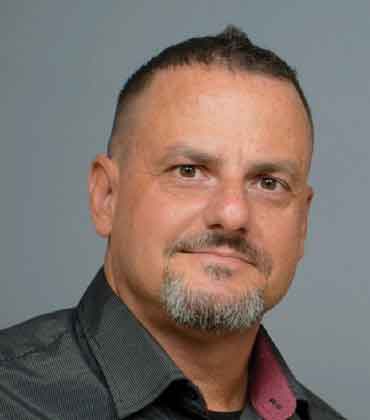
Vladislav Bardi is a Supply Chain optimization specialist with strong aim to improve business through practical and sustainable process solutions used throughout the organization by skilled, well trained and motivated teams.
How has the manufacturing tech landscape evolved over the years, from your perspective, and what are some of the advantages of the recent technology facilitating in the changes happening in the space?
Over the last few years, we have seen a solid push to optimise the supply chain to be more resource-efficient. The optimisation of supply chain processes is not only an achievable task but also economically efficient and viable. As businesses grow and strive for a more significant global presence, optimisation plays a holistic discipline by enabling manufacturers to get from proto to mass production and beyond with minimal resource waste. Even during the financial catastrophe, optimisation showed us how brittle it was to act smarter and processes more efficiently to lower costs and reduce rework that eventually minimises logistics waste.
Not only optimisation but even the influence of the environment has also brought to the forefront making manufacturing towards more eco-friendly processes. Usually, materials production was just focused on creating efficient profits for the business. But again, in the last 10 years, we have seen huge impacts by leaders and influencers taking ownership of producing products made from sustainable materials.
By combining both optimisation and eco-friendly aspects, we can put ourselves in doing more eco-friendly businesses with reduced business' costs through reduced energy use, for example, or recycling materials—an effective way to produce greener products.
This approach has also pushed us to take the initiative towards more eco-friendly production. To that end, recently, we have taken a unique approach in our mining industry to producing mining products by entirely focusing on green steel. It is produced at least 75 percent by leveraging industrial renewable energies.
Can you think of any other instance where you had been working towards implementing technology or a specific environmentfriendly approach in your company?
To kickstart, we have collaborated with one of our major clients— Epiroc Corporate—a significant player in a sustainable society and a global productivity partner for mining and infrastructure. With this collaboration, we have started a new project on producing more green steel products, which they will showcase in their upcoming exhibitions this fall. Hand in hand with the requirement for making more green steel products, we already have opened negotiations with some of the leading companies to install a large solar power plant. To stretch it over the supply chain, we also involved some of our major steel producers, Austrian Pestabin, who already had implemented a substantial volume of solar panels, ensuring that the material they provide us is 75 percent produced by renewable energies.
"As businesses grow and strive for a greater global presence, optimisation plays a holistic discipline by enabling manufactures to get from proto to mass production and beyond, with a minimal resource waste"
This collaboration was a critical step for us in the right direction for aligning our business with the eco-friendly trend requirement. Because in Scandinavia, for any award of mining contract, manufacturers will need to provide them with the certificate of the products supporting eco-friendly materials. If manufacturers do not show the necessary certification, they will not be awarded any contract. Thus, it all is interlinked across the entire supply chain.
Could you share the latest initiative where you have been implementing optimisation elements to grow your business?
Our factory was built in the 1950s, with an ancient business operation practice. And over those years, we weren't looking at optimised materials and process flow. But then, one day, the trend in the market for manufacturing optimisation eventually filled us up with the potential to take an optimised approach for a compelling business process. On that front, we have recently launched an optimising initiative related to optimising material flows and internal logistics. The idea behind this is to have very much undistorted material flow and minimise logistics waste. Through this initiative, we can either concentrate on similar operations, like machining in one segment and then material preparation in the second. On the hand, it is also necessary to do homework that aligns with daily production to grab an effective result as expected.
At PPS Group, we have chosen the option to concentrate on families of operations. For instance, we have organised one facility for material preparation and one for machining, which is most vital for us in welding products. Then the other for the final painting.
However, there are a lot of advantages to both strategies. But should always remember that while implementing any of the above processes, it is necessary to have product-specific and proper research on the market segment as well as the product— leading to an increase in efficiency by 8-30 percent—which is enormous for any manufacturing company in the space.
What advice would you give the other leaders in this industry or any other industry for tackling any optimisation projects inhouse for their workflow efficiencies?
Based on my experience, every project should be handled in a modular form that gives high flexibility at both ends with a long-lasting effect. Let's say reusable resources for upcoming projects. Because you can't build a new facility with every new project, if one project is running out, then the other one is coming in. All you have to do is 'reuse the resources', and it associates with giving you a valuable advantage in offering your client better and cost-effective solutions by maintaining same quality and efficiency. At the same time, develop your best know-how to produce the product in your way. It eventually gives you a competitive advantage in improving your project by project and making yourself a leader in the space.
In producing a new product line, they should always be a strategic partner to maintain a strong position in the supply chain. Let's face it; the supply chain is very vulnerable. When you're exposed to any market disruptions, as we are experiencing now, it's imperative to have very stable and reliable suppliers, without which no resources, no raw materials or services, can help us play risky games in terms of profit.
What proves to be the way is to develop your long-term relationships with probably not always the best companies in the space, but the best choice would be SMBs. Because they have a mindset of growing their business more robust, it will eventually make you stronger along with the use of efficient technology to place a space for themselves in the market.
